





How to use red light correctly: how long and how often?
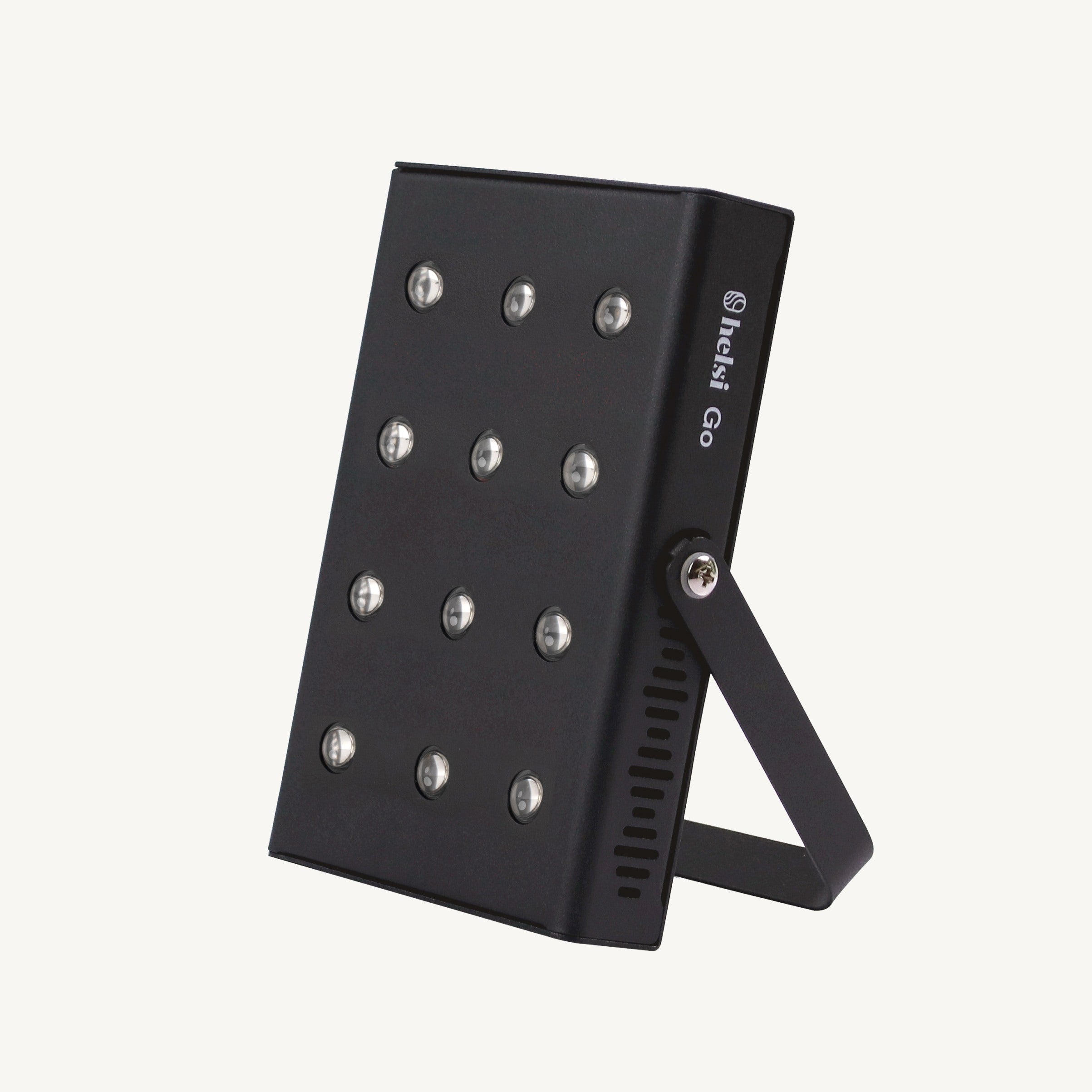
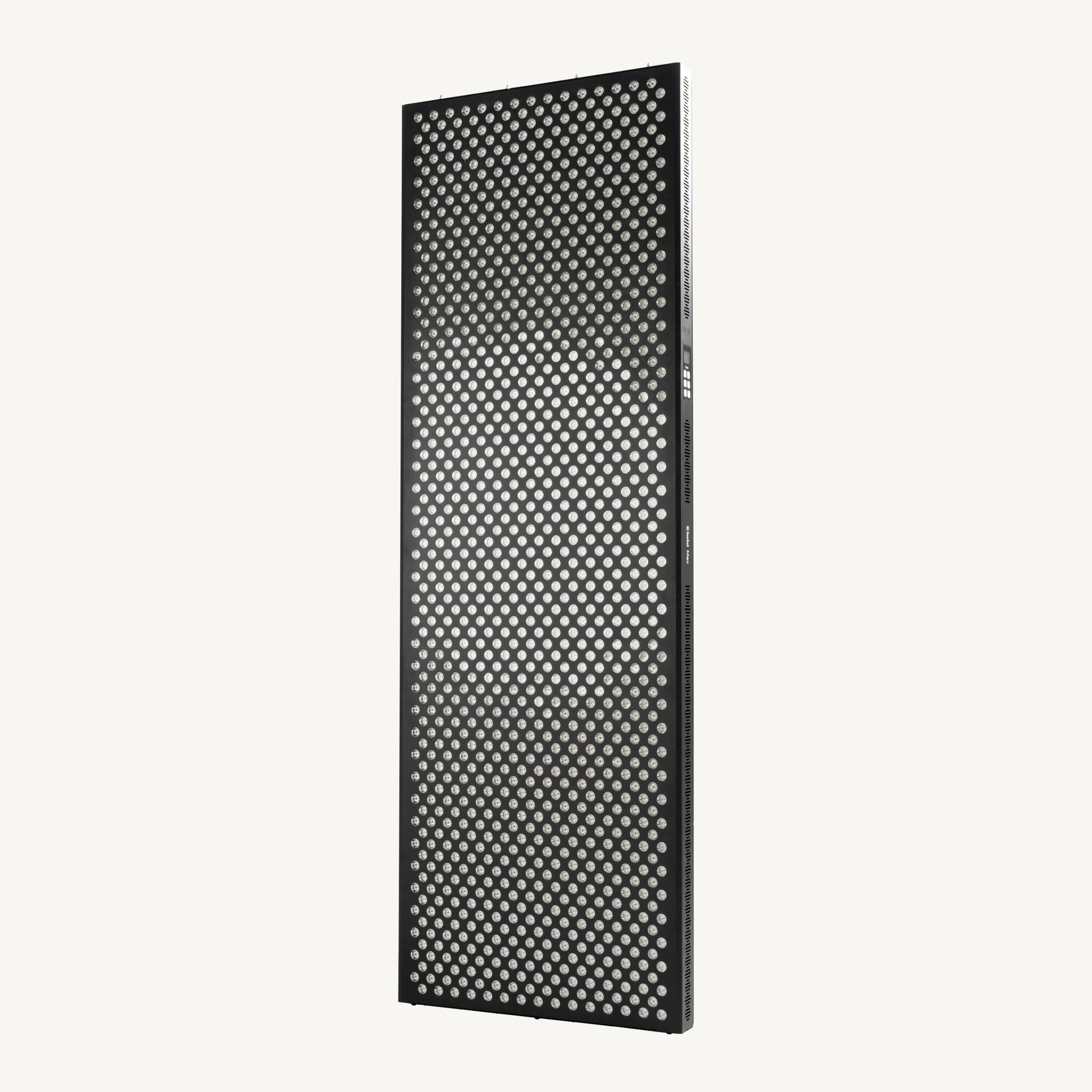
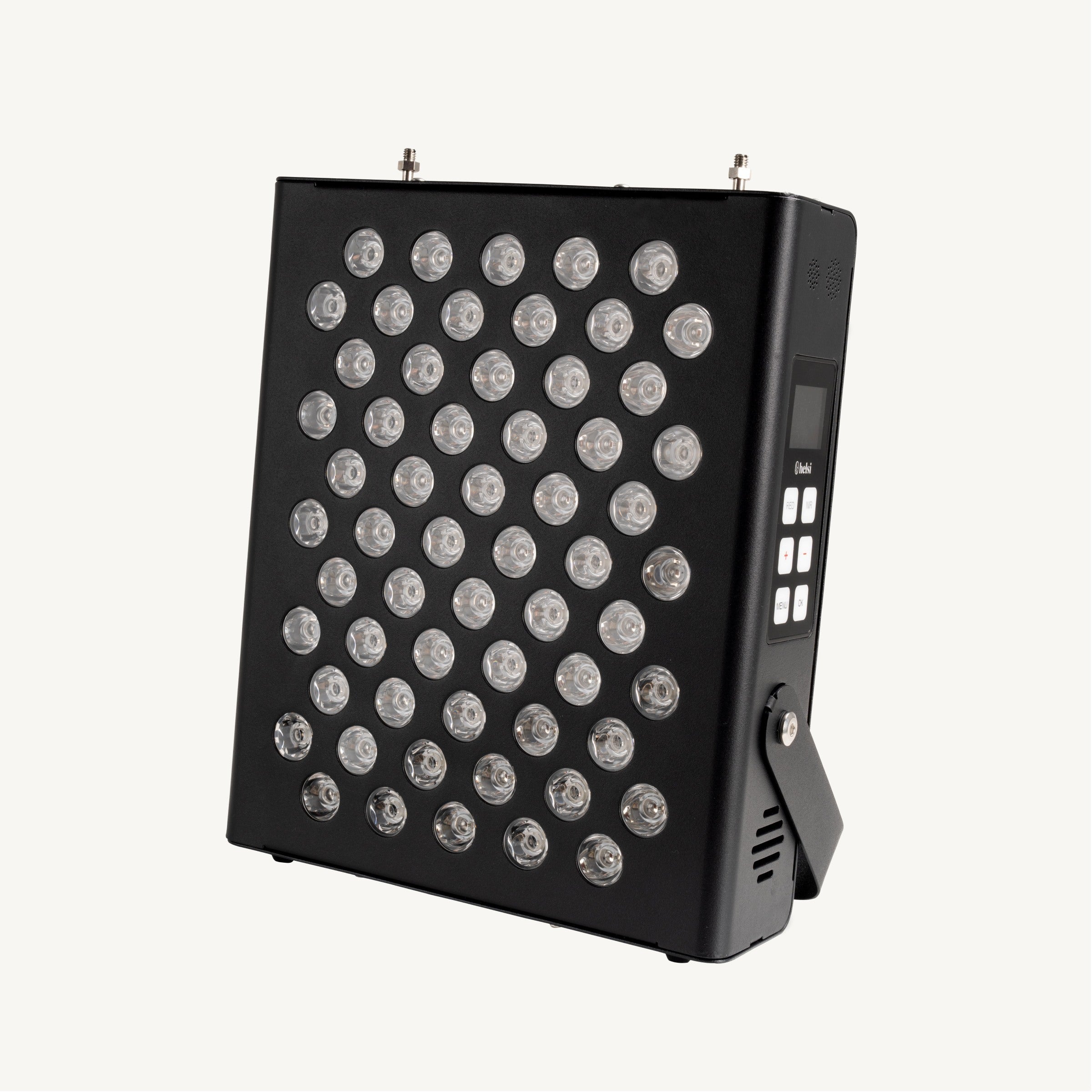
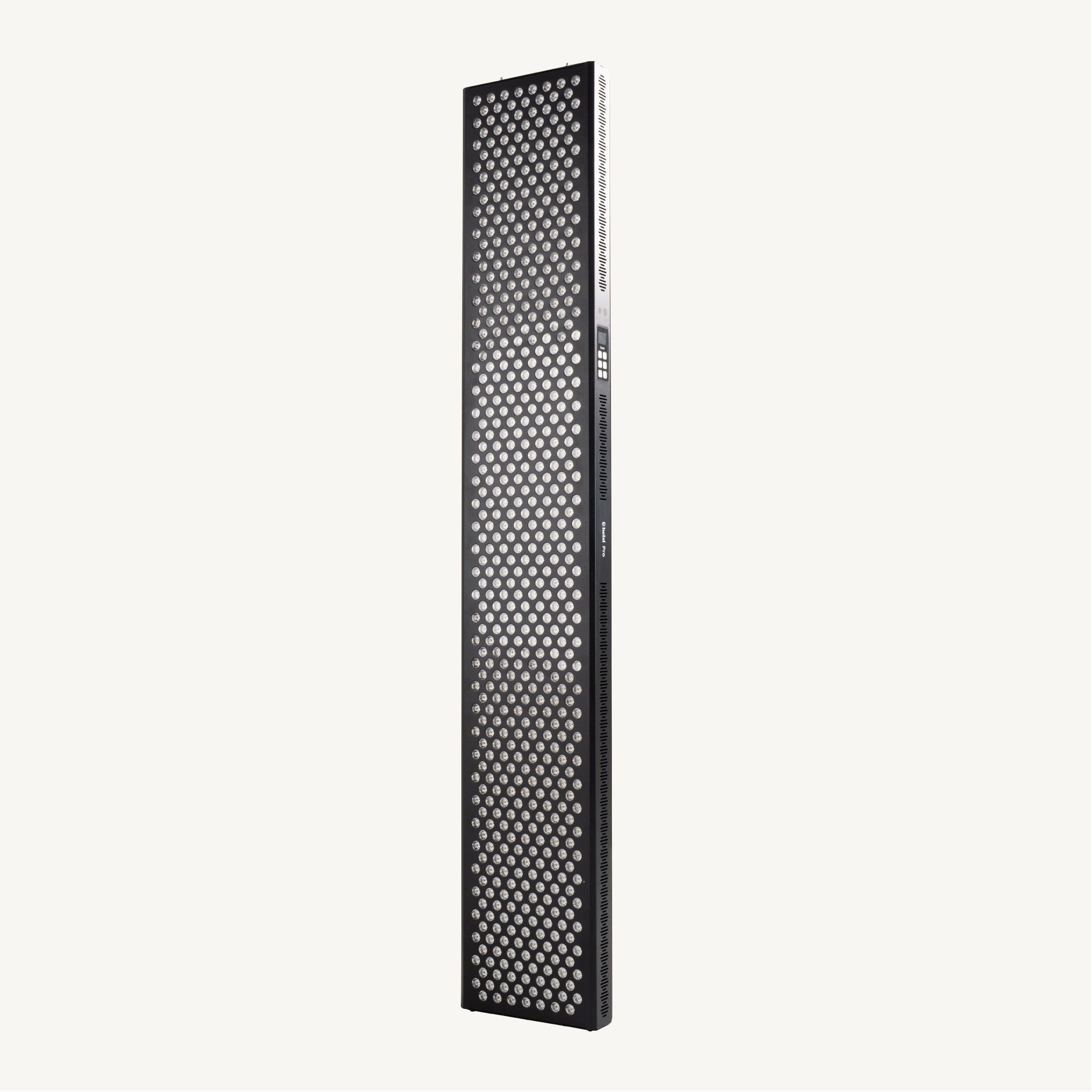
Red light therapy has evolved significantly in recent years. With our Helsi™ Go, Helsi™ Plus, Helsi™ Pro, and Helsi™ Max devices, you can easily use the latest Helsi™-optimized technology at home.
Here you will learn how long and how often you should use near-infrared red light therapy and what effects you can achieve with it.
But first, we would like to briefly explain what red light and near-infrared light mean and what the advantages of our modern devices are.
Red light and near-infrared light
Visible light is composed of spectral colors, which differ, among other things, in their wavelengths.
At one end of the spectrum is violet light with a wavelength of 380 to 420 nm (nanometers). At the other end, the light is red and has a wavelength of 650 to 780 nm. Following the red light in the spectrum is infrared light with a wavelength of 780 nm to 1 mm.
It is classified into near-, mid-, and far-infrared light and is invisible, but can be felt as heat. Red light and near-infrared light are used to treat individual areas of the skin. [1]
Your old red light lamp has reached the end of its lifespan.
You're probably familiar with the typical old red light lamps with the large bulbs. They emit light and heat in the red and infrared range and are said to alleviate certain ailments such as sinusitis, but also muscle tension.
These classic red light lamps are increasingly being replaced by a more modern, more effective technology.
Our near-infrared red light therapy devices: Helsi™ Mini and Helsi™ Plus
Near-infrared red light therapy is precisely tailored to the human organism. These light waves don't simply warm the skin; they penetrate the cells and exert their effects there.
The Helsi™ near-infrared red light therapy devices – Go, Mini, Plus, Pro, Max – incorporate LEDs (light-emitting diodes) that emit precisely the wavelengths from which the body benefits most: red light with a wavelength of 660 nm and near-infrared light with a wavelength of 850 nm. The LEDs are arranged in a flat pattern, allowing a larger area of the body to be treated simultaneously.
How often and for how long should near-infrared red light be used?
How often and for how long near-infrared red light therapy should be performed depends on several factors. Crucially, it depends on which specific health issues one wishes to improve, how one individually reacts to the irradiation, which part of the body is affected, and how thick and pigmented the skin is through which the red light penetrates the body.
The affected body part should be free of clothing and makeup during irradiation.
It is best to experiment a little within the recommended irradiation duration so that you can see how you react to the effects of near-infrared and red light therapy.
How do I choose the ideal distance when using it? How long should a therapy session last?
The distance and duration of use depend on the energy potential of the mitochondria or the cells. There is no simple answer here, as – from a scientific perspective – a multitude of parameters influence the distance and duration of use.
Assuming that it is a good red light device with sufficient intensity, the following rule of thumb can be used to simplify the calculation:
- At a distance of 20cm and an intensity of >100mW/cm², the cells can absorb approximately 6 joules per minute.
- According to an expert, the cells can absorb a maximum of 60 joules of energy in the form of near-infrared and red light. At the distance mentioned above, this results in a usage time of 10 minutes at a distance of 20 cm (provided it is a good quality red light device).
- At an increased distance, for example 40 cm, the exposure time changes by the same factor. Doubling the distance therefore doubles the duration. At a distance of 40 cm, it should therefore be used for approximately 20 minutes.
- The formula above applies per body region. Therefore, you could irradiate the upper body according to the formula above, and then another body region afterwards.
Generally, it is recommended to treat each desired body part for 10-15 minutes. You may also need a slightly longer session (up to 20 minutes) depending on the specific ailments being treated.
How many red light treatments per day are optimal?
Near-infrared red light therapy should be used regularly to achieve lasting effects. Ideally, the affected areas should be treated daily. Treatment up to three times a day is also possible, but several hours should pass between sessions.
How many weeks should one use near-infrared red light therapy?
For some conditions, it can take several weeks for the desired effects to appear with regular treatment. Improving chronic conditions often requires several months. Other effects, such as muscle recovery after exercise or improved skin elasticity, can occur after a short time.
When can therapy be ended?
Once the desired effects have been achieved, it can be beneficial to continue treatment to maintain the improved condition. Since near-infrared red light therapy has virtually no side effects, it can be used for extended periods.
Does red light therapy have side effects?
Near-infrared red light therapy is very safe and virtually free of side effects when used correctly.
It's possible that your skin will be slightly red and feel warm after treatment. This is due to the desired effects, such as increased blood circulation, and will subside after a short time. In this case, you can try shortening the treatment duration or placing the device a little further away from the affected area.
If you feel that your skin is reacting particularly strongly or in an unpleasant way to the therapy, stop the treatment and consult a doctor.
What should you be aware of when undergoing red light therapy?
If you are performing near-infrared red light therapy, you should keep a few things in mind:
- Use safety goggles if it's uncomfortable without them.
- Only irradiate healthy skin
- Red light therapy should not be used when taking certain medications.
Use safety goggles
Protect your eyes with suitable protective goggles during treatment if the radiation is uncomfortable. When you purchase an Aurora near-infrared red light therapy device, you receive optimal protective goggles free of charge.
Only irradiate healthy skin
Only irradiate healthy or slightly irritated skin. If you have a rash or benign or malignant tumors on your skin, always consult your doctor before starting treatment. They can advise you whether your skin condition would benefit from near-infrared red light therapy or whether you should wait before starting treatment.
You must not use red light therapy if you are taking certain medications.
Some medications (including those taken orally) can make the skin more sensitive to light. These include some antibiotics, acne medications, some painkillers, certain diabetes medications, and other drugs. You will usually find a corresponding warning in the package insert.
If you are taking medication and are unsure whether it increases the skin's sensitivity to light, consult a doctor before starting near-infrared red light therapy, just to be safe.
Areas of application: how our near-infrared red light therapy devices affect your health
Near-infrared light is used in many medical fields under medical supervision. But you can also benefit from the many positive effects of near-infrared light at home. Our Mini, Go, and Plus near-infrared red light therapy devices have been specially developed for self-treatment at home.
Please have your symptoms medically diagnosed first to ensure that near-infrared red light therapy is right for you and that you do not have a serious condition that requires additional treatment.
Here is an overview of the effects you can easily achieve in your own home with near-infrared red light therapy:
- Supplying the body cells with energy
- Regeneration of cells and tissues
- Improved blood circulation
- Better and faster wound healing
- Vitality and youthfulness of the skin
- Improved hair growth and reduced hair loss
- Improving fitness
- Improving sleep quality
Supplying the body cells with energy
Within cells, the mitochondria are responsible for producing the energy carrier adenosine triphosphate (ATP). Near-infrared red light therapy helps the mitochondria to make this energy available to the cells and thus to the entire body.
Regeneration of cells and tissues
Near-infrared light and red light improve the body's ability to regenerate. They stimulate the production of proteins that promote cell repair.
Improved blood circulation
During red light therapy, blood vessels dilate, increasing blood flow. This ensures that the tissue is well supplied with macro- and micronutrients, immune cells reach the tissue more effectively, and metabolic waste products are removed.
Better and faster wound healing
When the skin is injured or irritated and reddened by harmful environmental influences, the body's own wound healing mechanisms begin to work.
Destroyed cells grow back, the wound is closed, invading germs must be eliminated, and dead tissue is removed.
The cells involved in these repair processes can become more active under the influence of near-infrared light, which improves and accelerates wound healing.
Vitality and youthfulness of the skin
Collagen is found in many parts of the body that must withstand mechanical stress – including the skin. It gives the skin its strength and elasticity.
Over time, collagen production decreases, the skin becomes looser, and wrinkles appear. Many people are bothered by this cosmetic issue. Treatment with near-infrared light stimulates the body's own collagen production.
This makes the skin firmer, reduces wrinkles, and helps maintain a youthful appearance.
The improved blood circulation and wound healing described above also benefit the skin. Near-infrared red light therapy helps combat skin impurities caused by minor wounds and skin irritations.
Improved hair growth and reduced hair loss
Many men, but also women, are affected by hair loss. Near-infrared red light therapy can significantly increase hair growth on the scalp, as a study [2] has shown.
Improving fitness
Intense exercise leads to minor muscle damage. However, if the muscles are treated with near-infrared light before training, they fatigue less and recover faster after physical activity, as demonstrated in a study [3].
Improving sleep quality
The sleep-wake cycle is regulated, among other things, by the body's own melatonin, which promotes sleep. During the day, melatonin levels are low due to natural light.
Towards evening, more and more melatonin is released, and one has the need to go to sleep.
Nowadays, many people no longer live according to the natural rhythm of daylight. Shift work and spending time in rooms with little natural light disrupt the day-night rhythm. A study [4] showed that red light irradiation increases melatonin levels and improves subjective sleep quality.
Conclusion
Near-infrared red light therapy is a safe way to easily improve your health at home. If you follow the recommendations, near-infrared red light therapy is virtually free of side effects and very safe.
Near-infrared red light therapy increases energy production in body cells, promotes better wound healing, rejuvenates the skin, and stimulates hair regrowth. It also improves both fitness and sleep quality.
The treatment duration can vary from person to person, but is generally 10-15 minutes per body part daily. To achieve lasting effects, you should continue red light therapy regularly, even after the desired effect has been achieved, to maintain the results and prevent further problems.
Try it out yourself to find out which treatment duration works best for you and discover the many areas of your health that you can positively influence with Aurora's near-infrared red light therapy devices!
Sources
[1] https://www.mpifr-bonn.mpg.de/563197/einteilung
[2] https://www.tandfonline.com/doi/abs/10.1080/14764172.2017.1326609?journalCode=ijcl20
[3] https://www.ncbi.nlm.nih.gov/pmc/articles/PMC5167494/
[4] https://www.ncbi.nlm.nih.gov/pmc/articles/PMC3499892/pdf/i1062-6050-47-6-673.pdf
